Best China ETEL Motors for Global Buyers?

Choosing the best China ETEL motors requires more than comparing prices on a supplier website. Global buyers need dependable performance, clear documentation, and support after delivery. In practical sourcing, small details often decide whether a motor succeeds in a real installation. A clean factory floor helps, but it does not replace verified test data. Buyers should examine rated power, torque curves, efficiency, insulation class, cooling method, and expected service life. A motor that performs well beside a showroom test bench may behave differently inside a dusty workshop.

This guide examines how etel motors can be evaluated for international applications, including industrial equipment, automation systems, and energy-conscious machinery. It considers manufacturing experience, engineering capabilities, quality-control procedures, and communication with overseas customers. Factory audits, sample testing, serial-number records, and consistent datasheets can reveal more than marketing language. Relevant certifications and technical requirements should also match the destination market and the final machine. Warranty terms matter. Spare parts matter more than many buyers expect.

Not every attractive offer is a reliable one.

Some suppliers provide impressive specifications but limited after-sales evidence. Others may offer modest documentation while maintaining strong production discipline. That difference deserves careful investigation. Buyers should request load-test reports, customization limits, delivery records, and references from comparable projects. The decision may not be perfect, especially when factory information is incomplete. Still, a structured review can reduce avoidable risk and identify China ETEL motor options that fit both technical needs and long-term operating realities.
Best China ETEL Motors for Global Buyers?

What Are ETEL Motors and Why Do Global Buyers Consider China?

In industrial sourcing, ETEL motors usually means high-performance direct-drive linear or torque motors. They move loads without traditional gearboxes, reducing backlash and mechanical wear. Buyers use them in semiconductor tools, CNC equipment, robotics, and inspection systems. Precision matters here. A small thermal shift can affect positioning accuracy.

China attracts global buyers because its motion-control supply chain is broad and responsive. According to the International Federation of Robotics’ World Robotics 2024 report, China installed 276,288 industrial robots in 2023, about 51% of global installations. That scale supports local machining, magnets, encoders, drives, and testing services. It can also shorten customization cycles. The price is not always lower.

A practical evaluation should examine continuous force, peak force, encoder resolution, thermal management, vibration, and lifetime testing. Ask for measured data, not attractive catalog claims. ISO 9001 certification helps, but it does not prove motor performance. Factory acceptance tests should record speed, temperature rise, repeatability, and noise under the intended load. Buyers should also verify export documentation and service response times. China offers capable options, yet quality varies between factories. That gap deserves serious attention.

Best China ETEL Motors for Global Buyers?

Why Efficiency Standards Matter When Comparing Industrial Motors

Global buyers commonly compare motor suppliers through measurable factors such as IEC efficiency class, rated output, energy consumption, and lifecycle cost. The chart shows representative nominal efficiencies for common four-pole low-voltage motors. Actual minimum values vary by rated power, speed, voltage, frequency, and testing conditions. Higher-efficiency motors can reduce operating losses, which is especially important for continuously running industrial equipment.

Reference: IEC 60034-30-1 efficiency-class framework; values shown are representative market figures for comparison rather than a product specification.

Which China ETEL Motor Types Fit Different Industrial Applications?

Choosing China-made ETEL motors starts with the application, not the price. A servo motor suits packaging lines, robotic joints, and CNC equipment requiring accurate speed and position control. Its encoder provides feedback, while the drive corrects movement during changing loads. This matters when a machine must place products within a narrow tolerance.

Stepper motors fit printers, labeling machines, and light-duty indexing systems. They offer simple control and strong holding torque at low speed. However, missed steps can occur under sudden resistance. That assumption is often overlooked. A closed-loop stepper can reduce this risk, but it usually costs more and needs careful tuning.

For conveyors, pumps, fans, and compressors, induction motors remain practical choices. They tolerate continuous operation and usually need less complex control. A geared motor is more suitable when equipment needs high torque at low speed, such as lifting platforms or automated doors. Brushless DC motors work well in compact machines, cooling units, and battery-powered equipment because they provide efficient, quiet rotation.

Real selection requires checking torque curves, duty cycles, voltage, protection ratings, shaft dimensions, and ambient temperature. Factory experience shows that a motor rated for the correct power can still fail when starts are frequent or ventilation is poor. Request test data, insulation details, encoder specifications, and service support before approval. Cheap is not always efficient. Sometimes, the overlooked detail is installation space.

Best China ETEL Motors for Global Buyers? - Which China ETEL Motor Types Fit Different Industrial Applications?

Motor Type Typical Power Range Typical Speed Main Advantages Best-Fit Industrial Applications Important Selection Factors
Three-Phase Induction Motor Approx. 0.12–1,000 kW About 750–3,600 rpm at 50/60 Hz, depending on pole count Robust construction, simple maintenance, broad availability, and good cost efficiency Pumps, fans, compressors, conveyors, machine tools, mixers, and general production equipment Rated voltage and frequency, IE efficiency class, duty cycle, enclosure, ambient temperature, and starting method
Single-Phase Induction Motor Approx. 0.06–5.5 kW About 1,400–3,600 rpm at 50/60 Hz, depending on pole count Operates from widely available single-phase power and is suitable for smaller machines Small pumps, blowers, compressors, workshop equipment, agricultural machinery, and light-duty conveyors Starting torque, capacitor configuration, supply voltage, thermal protection, and available installation space
Brake Motor Approx. 0.12–200 kW Commonly 750–3,600 rpm Provides controlled stopping and holding when the motor is de-energized Hoists, cranes, elevators, winches, conveyors, packaging machines, and positioning equipment Brake torque, stopping time, holding load, brake release voltage, duty cycle, and emergency-stop requirements
Explosion-Protected Motor Approx. 0.12–500 kW Typically 750–3,600 rpm Designed to limit ignition risks in classified hazardous locations when correctly certified and installed Chemical processing, oil and gas facilities, paint plants, grain handling, solvent areas, and mines Hazardous-zone classification, gas or dust group, temperature class, certification region, IP rating, and cable entries
Permanent Magnet Synchronous Motor Approx. 1–500 kW Variable speed; commonly controlled by a drive High efficiency, high power density, and strong performance at variable loads and speeds High-efficiency pumps and fans, compressors, extruders, elevators, and energy-conscious production lines Drive compatibility, control method, demagnetization protection, cooling, overload profile, and efficiency requirements
AC Servo Motor Approx. 0.05–100 kW Commonly 1,000–6,000 rpm, with model-dependent overspeed capability Closed-loop control for accurate position, speed, and torque response CNC machines, robotics, printing, packaging, semiconductor equipment, and electronic assembly Encoder type, feedback resolution, peak torque, inertia matching, servo-drive protocol, and motion-controller compatibility
BLDC Motor Approx. 10 W–10 kW Typically 500–10,000 rpm, depending on design and controller Compact size, high efficiency, long service life, and electronic speed control without brushes Fans, pumps, AGVs, conveyors, medical equipment, automation modules, and battery-powered machinery Controller type, sensor or sensorless feedback, bus voltage, continuous torque, noise level, and thermal dissipation
Geared Motor Approx. 6 W–200 kW Output speed commonly 0.1–500 rpm Combines a motor with reduction gearing to deliver higher output torque at lower speed Material handling, mixers, gates, food-processing equipment, automated doors, and low-speed conveyors Gear ratio, output torque, service factor, radial and axial loads, backlash, mounting position, and lubrication
High-Efficiency IE3/IE4 Motor Commonly 0.75–315 kW Usually 750–3,600 rpm Reduces electrical losses and operating cost in applications with long annual running hours HVAC systems, water treatment, continuous-process lines, compressors, pumps, and fans Applicable IEC efficiency class, load profile, operating hours, variable-frequency-drive use, and local energy regulations
Selection note: The ranges above are typical industry values rather than universal limits. Final motor selection should be based on load torque, duty cycle, voltage and frequency, ambient conditions, mounting arrangement, enclosure or IP rating, efficiency requirements, applicable certifications, and compatibility with the control system.

How to Compare Chinese ETEL Motor Manufacturers and Product Quality?

For global buyers comparing China-made electric motors, the first filter should be measurable performance, not catalogue price. The IEA’s Energy Efficiency 2018 report estimates that electric motor systems use about 53% of global electricity. Small efficiency differences can therefore increase lifetime operating costs. Request the rated output, efficiency class, power factor, duty cycle, insulation class, protection rating, and speed curve.

Check whether the manufacturer tests every production batch. Useful records include winding resistance, insulation resistance, no-load current, vibration, temperature rise, and full-load efficiency. IEC 60034-30-1 defines international motor efficiency classes, while IEC 60034-2-1 describes efficiency testing methods. Ask for reports linked to serial numbers. Generic certificates are weaker evidence. Very simple.

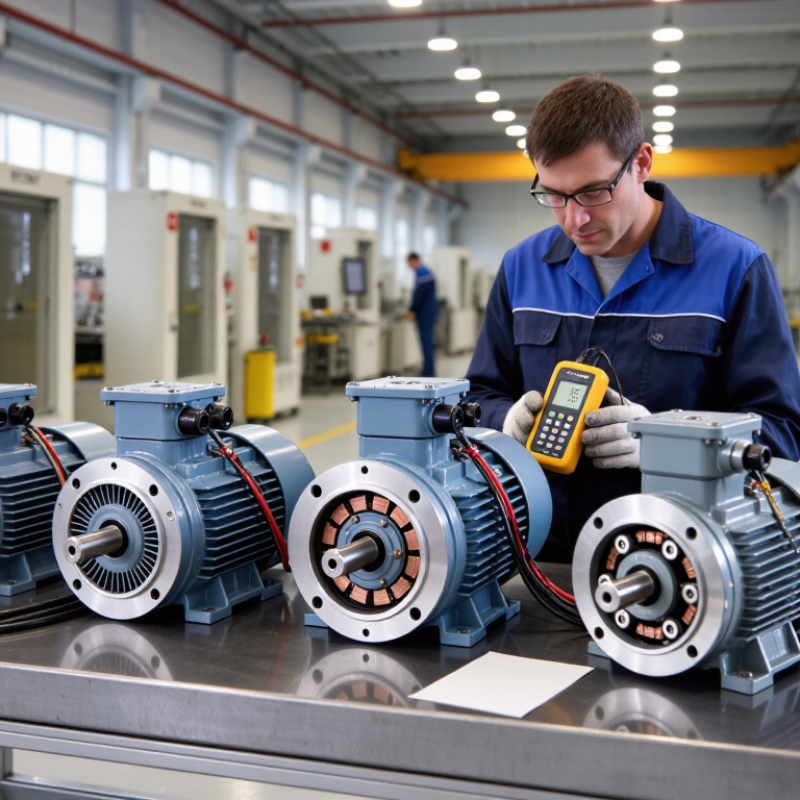
A practical factory review should examine rotor balancing, copper traceability, bearing storage, assembly cleanliness, and calibration records. Compare three samples from different production dates, then repeat the load test after thermal stabilization. Look for stable current and vibration readings. The U.S. Department of Energy notes that motor-driven systems represent a major industrial energy demand, making efficiency verification commercially important.

One weakness remains: laboratory samples may not match later batches. Include acceptance limits, spare-parts commitments, warranty response times, and independent pre-shipment inspection in the contract. That feels less exciting, but it protects the purchase.

What Standards, Certifications, and Specifications Should Buyers Check?

Best China ETEL Motors for Global Buyers?

When evaluating ETEL motors from China, buyers should verify standards before comparing prices. Check whether the motor follows IEC 60034 requirements for electrical rotating machines. Confirm the exact efficiency class, such as IE2, IE3, or IE4. The certificate must match the model, rated power, and production site. A generic document is not enough.

Request CE documentation for applicable European markets, plus EMC and RoHS evidence when required. Buyers targeting North America may need certification accepted by local authorities. Confirm the testing laboratory and certificate validity. Ask for an IP rating, insulation class, temperature-rise report, and routine test record. These details matter in dusty workshops and humid ports. They are not decorative paperwork.

Specifications should match the real installation. Check voltage, frequency, phase, rated speed, torque, duty cycle, starting current, mounting form, shaft size, and bearing arrangement. For variable-frequency drives, confirm inverter-duty insulation and acceptable speed ranges. Ask for vibration limits and noise measurements. Also request serial-number traceability and a sample inspection plan. A factory video can help, but it cannot replace testing. I would not trust a perfect-looking datasheet alone. Small differences in cooling design can change service life.

How Do Pricing, Customization, Shipping, and After-Sales Support Differ?

Best China ETEL Motors for Global Buyers?

For global buyers, motor pricing rarely depends on the unit alone. It can change with voltage, torque, encoder type, insulation class, and order volume. A low quotation may exclude tooling, testing, export packaging, or local taxes. I have seen buyers compare two prices without checking the same specification. That mistake becomes expensive later. Request a detailed pro forma invoice and confirm payment terms, warranty length, and testing documents.

Customization can improve performance, but it usually affects lead time and minimum order quantity. Suppliers may adjust shafts, mounting holes, connectors, firmware, or cooling methods. Ask for a dimensional drawing before production. A sample should run under realistic load, not only on a workbench. Small details matter. Confirm whether the design remains compatible with your controller and replacement parts. Some customization requests sound simple but require new tooling.

Tips: Compare landed cost, not factory price. Clarify Incoterms, shipping insurance, carton dimensions, and expected transit time. For after-sales support, request a named technical contact, response targets, troubleshooting procedures, and spare-part availability. Reliable suppliers should provide inspection records and help investigate vibration, overheating, or encoder faults. However, support quality can vary after payment. Test communication before ordering, and keep every approved drawing in writing. A perfect process is unlikely, so leave time for rechecking specifications and correcting misunderstandings.