Choosing the right Study Furniture can shape how comfortably and consistently a student works. In 2026, the best sets do more than pair a desk with a chair. They make room for books, a laptop, stationery, and the everyday clutter that rarely stays put. Small rooms need smart choices.
This guide explores ten study furniture sets for different spaces, routines, and budgets. It considers practical details such as desk dimensions, storage, surface durability, chair adjustability, and how easily each set fits into a bedroom or shared study area. A drawer is useful only if it opens without hitting a bed. A compact desk may save space, yet leave little room for written work. Those trade-offs matter.
Comfort deserves attention, but no furniture set can guarantee better focus or posture on its own. Students should compare measurements with their available space and check product specifications before buying. Where possible, inspect the materials and try the chair in person. Online photos can be flattering. They do not show every wobble.
The selections below are intended to help readers narrow their options, not declare one perfect choice for everyone. Study habits, body size, room layout, and budget all differ. Some recommendations may suit a first-year student; others may work better for a busy family workspace. A little measuring first can prevent an expensive mismatch later.
10 Best Study Furniture Sets for Students in 2026
A student study furniture set usually pairs a desk with a chair, sometimes adding shelves or storage. ANSI/BIFMA standards help buyers assess how certain furniture performs under defined tests. They may address areas such as strength, stability, and durability. However, a standard does not automatically prove that a whole set is comfortable or right for every student. Check the test documentation for the exact model and standard; a vague “meets standards” claim is not enough. A sturdy desk can still feel awkward if its height leaves a student’s shoulders raised or feet dangling. That detail is easy to miss.
Tips: Measure the available space and the student before choosing. Look for a stable desk, a chair that supports a comfortable posture, and clear information about tested components. Check drawers and shelves with everyday books, not just empty showroom space. Standards are useful, but they do not solve every fit problem. Even careful measuring can be imperfect; let the student try the chair, if possible.
Typical planning ranges for a student workstation, shown in inches. ANSI/BIFMA standards assess furniture performance and safety; they do not prescribe one universal set of ergonomic dimensions. Use these ranges as general design references, and check the applicable standard for specific compliance requirements.
Bars show approximate lower-to-upper planning ranges; individual fit depends on student height, posture, and workstation setup.
When comparing student study furniture sets, measure the viewing distance from the student’s eyes to the screen. OSHA’s commonly cited 20–40-inch range is a practical reference, not a rigid fit test. A smaller screen may need to sit closer, while a larger display can often sit farther away. Keep the screen directly ahead to limit neck twisting, with its top near or slightly below eye level. Text should remain readable without leaning forward. Small adjustments matter.
A useful set lets the chair, desk, and monitor work together. Adjust the chair so feet rest flat and elbows sit near desk height; then position the screen within a comfortable distance. If the desk is too deep, a stable monitor stand can help. If it is shallow, pushing the screen back may leave little room for books or a keyboard. Check the fit during an actual study session, not just while assembling the furniture. A set can look tidy in a product photo and still leave a student craning forward. The distance range helps, but comfort varies, and it is worth checking again after the student’s setup changes.
A dorm-room furniture set should fit the room’s walking paths, not just its floor plan. Measure the wall, door swing, closet access, and space beneath the bed before choosing a desk-and-storage combination. Leave a clear route from the entrance to the bed; a drawer that opens into that route can make a compact room feel crowded. Small details matter.
OSHA’s Computer Workstations eTool recommends placing a monitor about 20 to 40 inches from the user’s eyes. Use that range to test whether a desk leaves enough depth for a screen, keyboard, and notebook without pushing the chair into the bed. Measure the chair, too. It needs room to pull back, even when that costs storage space. The trade-off is real.
Choose vertical shelving only where it will not block a window or closet, and check that tall units can be secured as their manufacturer directs. A narrow drawer unit may hold chargers, stationery, and folded clothes, but its handles still need clearance. Student rooms rarely match a neat product diagram; measure again after unpacking. That extra check can catch a fit that looked fine on paper.
A student furniture set can look modest in a bedroom, yet its materials shape what happens when it wears out. The EPA estimated that U.S. furniture and furnishings generated 12.1 million tons of municipal solid waste in 2018. This is a historical figure, not a prediction for 2026. Still, it gives buyers a reason to examine desks, chairs, and shelves beyond their price tags.
Can a loose joint be tightened? Can a scratched surface be repaired? These questions matter more than a glossy finish that hides fragile construction.
Solid wood and metal parts can often be repaired or separated, though neither guarantees a lower impact in every case. Engineered boards may use wood efficiently, but damaged panels can be difficult to fix, especially when edges swell after a spill. Check for sturdy screws, replaceable hardware, and surfaces that tolerate daily cleaning.
Small choices matter. A compact set that fits the room may avoid unwanted pieces later. Flat-pack furniture can reduce shipping volume, but thin packaging and complex assembly may frustrate students—and parts can go missing during a move.
No material is perfect. I would compare durability, repair options, and the likelihood of reuse, while admitting that labels rarely tell the whole story.
Comparing the 10 best study furniture sets for students in 2026 means looking beyond matching finishes. A compact desk-and-chair set may suit a bedroom corner, while a wider desk with shelves offers more room for books and a monitor. Measure the available floor space before comparing features. Leave enough clearance to pull out the chair and open drawers comfortably.
The most useful differences are desk depth, storage access, chair support, and adjustability. A shallow surface saves space but can feel crowded when textbooks, a laptop, and a lamp share it. A taller shelf adds storage, though it may block light from a nearby window. Small details matter. Check whether drawers slide smoothly and whether the chair supports a relaxed, upright posture. Assembly time and the number of loose parts also affect everyday use.
For a fair comparison, match each set to a student’s routine rather than choosing by appearance alone. A student who studies mainly on a laptop may need less surface space than someone who spreads out notebooks and art materials. Fixed-height furniture can be less adaptable as needs change. That trade-off is easy to miss. Product measurements and listed features are helpful, but comfort depends on the student’s height, habits, and room layout. A set that looks ideal online may still feel awkward at home.
Comparison of ten practical study-set configurations. Dimensions are representative planning measurements, not specifications for a particular product; confirm the assembled measurements before purchase. Desk dimensions are width × depth, and all measurements are approximate.
| Study Set | Desk Dimensions | Desk Height | Chair Seat Height | Storage Included | Approx. Floor Space | Best Suited For |
|---|---|---|---|---|---|---|
| Compact Writing Set | 90 × 45 cm (35 × 18 in) | 74 cm (29 in) | 43–53 cm (17–21 in), adjustable | One shallow drawer | About 0.6 m² (6.5 ft²) | Small bedrooms and laptop-based study |
| Classic Student Desk Set | 120 × 60 cm (47 × 24 in) | 75 cm (29.5 in) | 43–53 cm (17–21 in), adjustable | One or two drawers | About 0.9 m² (9.7 ft²) | Everyday homework, reading, and computer use |
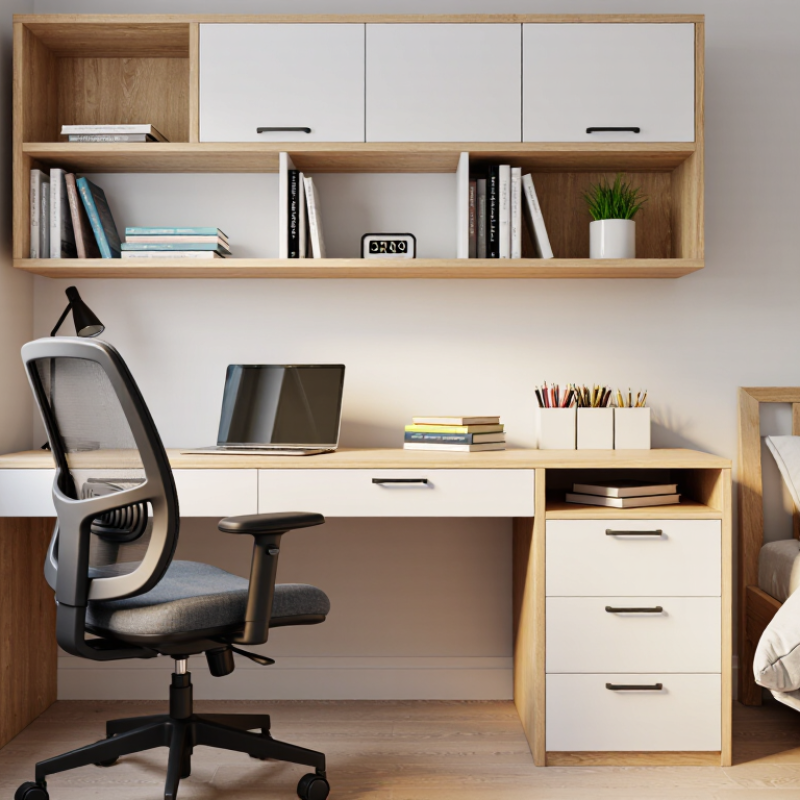
| Desk-and-Hutch Set | 120 × 60 cm (47 × 24 in) | 75 cm (29.5 in) | 43–53 cm (17–21 in), adjustable | Raised shelves and two drawers | About 0.9 m² (9.7 ft²), plus vertical clearance | Students who need books and supplies close at hand |
| Corner Study Set | 120 × 120 cm overall (47 × 47 in) | 74–76 cm (29–30 in) | 43–53 cm (17–21 in), adjustable | One drawer unit and corner shelves | About 1.0 m² (10.8 ft²) | Making use of an available room corner |
| Computer Study Set | 120 × 60 cm (47 × 24 in) | 74–76 cm (29–30 in) | 43–53 cm (17–21 in), adjustable | Keyboard tray and cable-management openings | About 0.9 m² (9.7 ft²) | Desktop computers and online coursework |
| Writing-and-Storage Set | 110 × 55 cm (43 × 22 in) | 74–76 cm (29–30 in) | 43–53 cm (17–21 in), adjustable | Two to three drawers | About 0.8 m² (8.6 ft²) | Keeping stationery, notebooks, and papers organized |
| Standing Desk Set | 120 × 60 cm (47 × 24 in) | Adjustable, approximately 70–120 cm (27.5–47 in) | Optional; a compatible stool typically adjusts around 55–80 cm (22–31 in) | Usually a shelf or modest drawer storage | About 0.9 m² (9.7 ft²) | Alternating between seated and standing study |
| Shared-Space Double Set | 160 × 60 cm (63 × 24 in) | 74–76 cm (29–30 in) | 43–53 cm (17–21 in), adjustable | Center divider or separate drawer sections | About 1.2 m² (12.9 ft²) | Two students sharing a room or study area |
| Mobile Study Set | 100 × 50 cm (39 × 20 in) | 72–76 cm (28–30 in) | 43–53 cm (17–21 in), adjustable | Small drawer unit, often on casters | About 0.7 m² (7.5 ft²) | Flexible rooms where furniture needs to move easily |
| Ergonomic Study Set | 120 × 60 cm (47 × 24 in) | 74–76 cm (29–30 in) | Adjustable, typically 43–53 cm (17–21 in) | One drawer or under-desk storage | About 0.9 m² (9.7 ft²) | Longer study sessions; prioritize adjustable seating and suitable desk fit |