What is a Semiconductor Company and How Does it Impact Technology?
The semiconductor industry is vital to modern technology. A semiconductor company plays a significant role in this sector. In 2022, the global semiconductor market reached over $600 billion. This number is expected to grow as demand rises for electronic devices.
Semiconductors are the backbone of devices like smartphones, computers, and automotive systems. Companies like Intel and TSMC lead the market. Their innovations drive technological advancements. However, the industry faces challenges, such as supply chain issues and geopolitical tensions.
The reliance on a few major suppliers can create vulnerabilities. The semiconductor sector must navigate these complexities to sustain growth. The future is uncertain, yet the promise of innovation remains strong. Investing in semiconductor research is critical for overcoming these hurdles.
What Defines a Semiconductor Company in the Modern Tech Landscape
Semiconductor companies play a crucial role in the tech landscape. They design and manufacture chips that power everything from smartphones to advanced AI systems. Their impact on everyday technology is profound. Without these companies, modern electronics would not be possible.
What defines a semiconductor company today? It's not just about making chips. It's about innovation. These companies invest heavily in research and development. They push the boundaries of technology, creating smaller, faster, and more efficient components. However, they often face challenges in keeping up with rapid advancements. Sometimes, their innovations might lead to unintended consequences.
Tips: Stay updated on semiconductor trends. Knowledge is powerful. Learning about new technologies can open doors.
The industry is also competitive. New players emerge regularly. This dynamic can lead to a mix of improved products and potential oversaturation. Companies that do not adapt might struggle or fail. It’s a constant balancing act of creativity and market demands. Understanding these factors is essential for anyone interested in technology.
Tips: Explore tech forums for insights. Engaging with communities can provide different perspectives. Collaboration and shared knowledge are key in this field.
The Role of Semiconductors in Electronic Devices and Systems
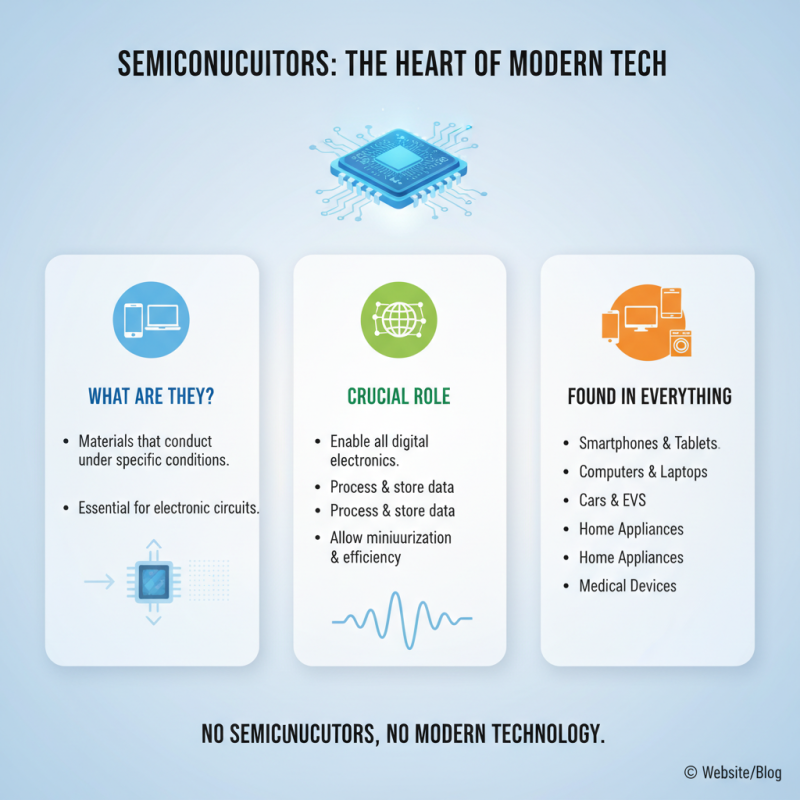
Semiconductors play a crucial role in electronic devices and systems. These materials can conduct electricity under certain conditions, making them essential for various applications. They are found in smartphones, computers, and many household appliances. Without semiconductors, today's technology would not function as we know it.
Many people overlook the complexity of semiconductor technology. Tiny transistors within chips enable processing and storage. These components are miniaturized to fit advanced functionality into small spaces. The demand for smaller, more powerful devices continues to rise. However, this raises concerns about sustainability and resource management.
As technology advances, challenges arise. Production can lead to environmental harm, including waste and pollution. Creating more efficient manufacturing processes is essential. The semiconductor industry must balance innovation with responsibility. Addressing these issues is vital for future progress in technology.
Key Processes in Semiconductor Manufacturing and Design
Semiconductor manufacturing involves several key processes that shape modern technology. The journey begins with the design phase, where engineers create blueprints of circuits. These designs must optimize performance and reduce energy consumption. However, mistakes in this phase can lead to inefficient products that may not meet consumer needs.
Once designs are finalized, the fabrication process starts. This intricate procedure includes photolithography, etching, and doping. Each step requires precision to ensure the correct patterns are formed on silicon wafers. It is an art and a science, with any error possibly resulting in a defective chip. Cleanroom environments are needed to avoid contamination, highlighting the delicate balance between efficiency and quality.
After fabrication, testing is crucial. Chips undergo rigorous evaluations for functionality and reliability. However, this stage often reveals flaws missed earlier. Engineers must then reassess designs or tweak fabrication processes. Continuous iteration is necessary, demonstrating the complexity of semiconductor manufacturing. While advancements push the boundaries of technology, the industry continually faces challenges that demand reflection and improvement.
Major Players in the Semiconductor Industry and Their Contributions
The semiconductor industry serves as the backbone of modern technology. Numerous companies work diligently to design and manufacture these essential components. They create microchips that power computers, smartphones, and numerous household devices. Without their innovations, our everyday technology would remain stagnant.
Many key players drive advancement in this field. They focus on refining fabrication techniques and improving chip performance. Their competitive nature fosters rapid innovation. Some companies specialize in processors, while others focus on memory storage solutions. Each contribution pushes technology forward, but challenges remain. Supply chain disruptions can halt production, impacting numerous sectors.
Collaboration is often necessary in this industry, yet it can harbor inefficiencies. Companies may struggle with resource allocation. This can lead to delays and unmet demands. As technology continues to evolve, the semiconductor industry must adapt. Future advancements hinge on enhancing production methods while addressing these underlying issues.
Future Trends and Innovations in Semiconductor Technology
Semiconductor technology is evolving rapidly. It plays a key role in various sectors. Advances in this field drive innovation in electronics, healthcare, and artificial intelligence. More efficient chips are becoming vital for automation. The future points towards smaller, more powerful devices.
Expect to see improvements in energy efficiency. As devices become more dependent on renewable energy sources, energy-efficient semiconductors will be essential. They enable sustainable solutions and reduce environmental impact. These innovations could lead to smarter cities and enhanced connectivity.
Tip: Look out for trends in materials. Silicon is traditional, but new materials might emerge. They could reshape electronics and performance.
Moreover, the rise of AI demands more powerful processing capabilities. Semiconductors must keep pace with this technology. This challenge requires constant innovation. It’s worth considering the balance between speed and energy consumption.
Tip: Pay attention to emerging technologies. They can change the landscape overnight and impact many industries.
The semiconductor field isn’t without flaws. Supply chain issues can disrupt progress. Companies must be flexible and adaptable. Reflecting on lessons learned can foster resilience and creativity in problem-solving.