Why Do Global Buyers Choose Motion Systems?
Global buyers choose motion systems when precision, reliability, and practical support matter beyond the product brochure. In factories, laboratories, and automated warehouses, every movement affects output. A small positioning error can damage components, delay orders, or increase maintenance costs. Buyers therefore examine more than speed and load ratings. They study repeatability, operating temperature, service life, integration options, and documented test results.
Real-world experience often shapes the final decision. Engineers may compare a servo axis moving smoothly at high speed with one producing visible vibration. They may inspect cable routing, listen for unusual noise, and review performance data after continuous operation. These details reveal how a motion systems supplier handles demanding conditions. Clear specifications, traceable quality procedures, and responsive technical support also build confidence across different markets. Compliance with applicable safety and electromagnetic standards remains essential. So does communication.
Yet no supplier is perfect. Product limits, lead times, or regional service gaps can affect an otherwise strong proposal. Buyers who ask difficult questions usually make safer, more informed choices. They want suppliers that explain trade-offs honestly, not companies promising effortless performance in every environment. A reliable partner should offer engineering guidance, practical documentation, and support from initial design through maintenance. This balance explains why many global buyers continue evaluating motion systems through evidence, field experience, and long-term value rather than price alone. The choice is technical, but never purely technical. Trust is tested on the factory floor.
What Are Motion Systems and How Do They Work?
Why Do Global Buyers Choose Motion Systems?
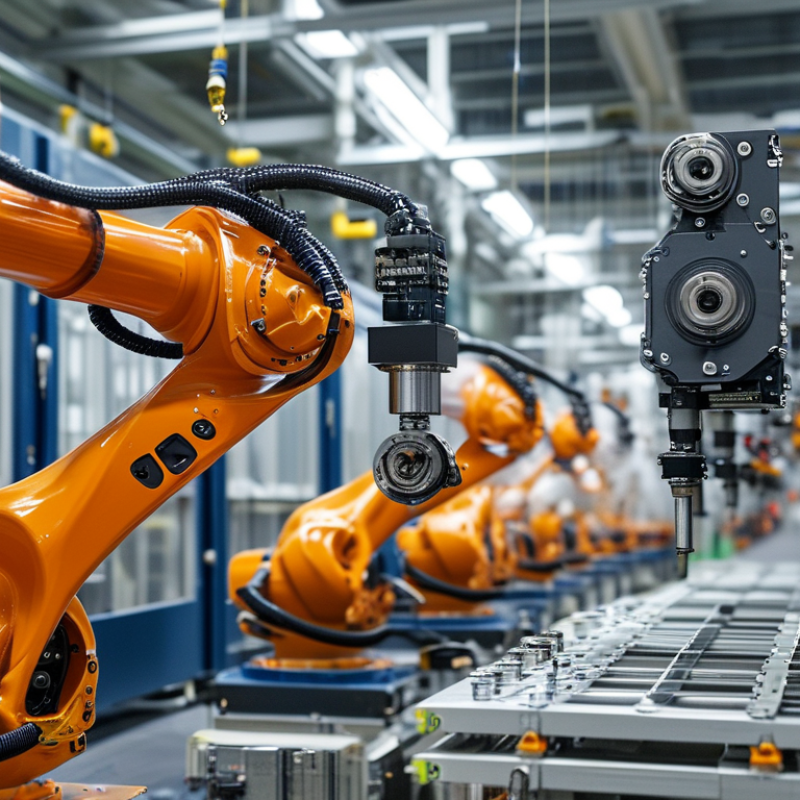
Motion systems convert electrical commands into controlled movement. A typical setup combines a motor, drive, controller, sensors, and mechanical parts. The controller sends a position or speed command. The drive regulates current, while the motor produces torque. Feedback sensors then measure movement and correct errors in milliseconds.
The mechanics matter too. A screw can move a platform smoothly along a rail. A belt can transfer motion across a longer distance. Gearboxes add force but may introduce backlash. Small errors become visible when a machine places parts repeatedly. According to the International Federation of Robotics’ World Robotics 2024 report, 541,302 industrial robots were installed globally in 2023. Each robot depends on coordinated motion across several axes.
This demand explains why buyers compare motion systems by accuracy, response time, energy use, and serviceability. The MarketsandMarkets Motion Control Market report projects continued growth through the decade, driven by automation, electronics, and smart manufacturing. Yet performance figures can mislead. A faster motor may create vibration. Higher precision may require tighter installation and maintenance. Real factories contain dust, heat, worn couplings, and imperfect alignment. Good engineering accounts for these details before selecting components. Safety-rated control, documented testing, and trained technicians remain essential. Sometimes, simpler wins.
Why Do Global Buyers Choose Motion Systems? - What Are Motion Systems and How Do They Work?
| Motion System Type | How It Works | Main Motion | Typical Travel or Rotation | Typical Speed Range | Typical Positioning Capability | Common Applications | Why Global Buyers Consider It |
|---|---|---|---|---|---|---|---|
| Linear Motor System | Electromagnetic force produces direct linear movement without a mechanical screw or belt transmission. | Linear | From several millimeters to several meters, depending on the guide and machine architecture. | Approximately 0.5–5 m/s | Often in the micrometer range when paired with a suitable encoder and guideway. | Semiconductor equipment, electronics inspection, precision assembly, laboratory automation. | High acceleration, low mechanical wear, smooth movement, and excellent suitability for frequent start-stop cycles. |
| Ball-Screw Linear Stage | A rotating screw converts motor rotation into controlled linear travel through a recirculating ball nut. | Linear | Commonly 50 mm–2 m per axis | Approximately 0.05–1 m/s | Typically a few micrometers to tens of micrometers, depending on screw accuracy, encoder, and structure. | CNC machines, medical equipment, testing systems, precision positioning platforms. | Strong thrust capability, mature technology, repeatable performance, and broad availability of compatible components. |
| Belt-Driven Linear Axis | A motor drives a toothed belt attached to a carriage, producing fast linear movement along a guide rail. | Linear | Typically 0.2–6 m, with longer travel available in modular systems. | Approximately 0.5–4 m/s | Typically around 0.05–0.2 mm, depending on belt tension, encoder, load, and structure. | Packaging, material handling, dispensing, pick-and-place, and automated assembly. | Long travel, high throughput, relatively low cost, and simple integration into modular automation equipment. |
| Rack-and-Pinion Axis | A rotating pinion gear engages with a linear rack to convert rotary motion into long-distance linear travel. | Linear | Several meters to more than 10 m in large industrial machines. | Approximately 0.2–2 m/s | Usually tens of micrometers to tenths of a millimeter, depending on gearing, backlash control, and feedback. | Large-format cutting, gantry systems, welding, machine tools, and robotic transfer equipment. | Suitable for long axes, high loads, and large machine envelopes where screw-driven systems may be impractical. |
| Rotary Servo System | A servo motor, drive, feedback device, and controller work together to regulate torque, speed, and angular position. | Rotary | Continuous rotation or controlled angular movement up to 360° and beyond. | Commonly 1,000–6,000 rpm, depending on motor size and load. | From approximately 0.01° to 0.1° at the output, depending on encoder and transmission. | Robotics, indexing tables, winding equipment, printing, converting, and automated production lines. | Accurate control of speed and torque, strong synchronization capability, and suitability for dynamic production processes. |
| Stepper Motor System | The controller energizes motor phases in sequence, moving the rotor through defined angular steps. | Rotary or converted linear motion | Typically 1.8° per full motor step; microstepping provides finer command resolution. | Often 300–1,200 rpm, depending on torque and drive settings. | Good repeatability at moderate speeds; absolute accuracy depends on load, resonance, and mechanical transmission. | Printers, laboratory instruments, small automation devices, valves, and indexing mechanisms. | Simple control architecture, predictable incremental movement, and cost-effective performance for moderate-load applications. |
| Pneumatic Motion System | Compressed air moves a piston or rotary actuator through controlled pressure and valve switching. | Linear or rotary | Linear strokes commonly range from 10 mm to 1 m; rotary angles are often 90° or 180°. | Typically 0.05–1 m/s, depending on cylinder size, valves, and load. | Generally lower than electric systems; repeatability is affected by air compressibility and load variation. | Clamping, pressing, sorting, packaging, gripping, and fast repetitive machine functions. | Fast installation, simple force generation, robust operation, and suitability for clean or hazardous environments when correctly specified. |
| Hydraulic Motion System | Pressurized fluid drives a hydraulic cylinder or motor to generate high force or torque. | Linear or rotary | From short strokes to several meters; continuous rotary motion is also possible. | Often 0.01–0.5 m/s for cylinders, depending on circuit design. | Typically lower than precision electric systems, although feedback-controlled hydraulic systems can improve accuracy. | Heavy machinery, presses, mobile equipment, forming equipment, and high-force industrial systems. | Very high force density, shock-load tolerance, and reliable performance in demanding heavy-duty applications. |
| Cartesian Robot | Two or more linear axes are arranged orthogonally and coordinated by a motion controller. | Multi-axis linear | Axis travel commonly ranges from 100 mm to several meters. | Approximately 0.1–3 m/s per axis | Typically from 0.01 mm to 0.1 mm, depending on drive, guide, structure, and feedback. | Pick-and-place, dispensing, palletizing, machining, inspection, and 3D printing. | Clear workspace geometry, scalable travel, straightforward programming, and efficient use of floor space. |
| SCARA Robot | Two parallel rotary joints provide horizontal positioning, while additional axes control vertical movement and tool rotation. | Multi-axis rotary and linear | Typical horizontal reach is approximately 400–1,000 mm. | Often 30–120 cycles per minute, depending on payload and motion profile. | Commonly in the 0.01–0.1 mm range for repeatability. | Electronics assembly, screwdriving, dispensing, packaging, and high-speed component transfer. | High horizontal speed, compact footprint, repeatable assembly performance, and efficient handling of lightweight parts. |
Note: Performance figures are representative engineering ranges rather than guaranteed specifications. Actual results depend on payload, stroke length, guideway design, motor sizing, control parameters, environmental conditions, and required duty cycle.
Related Posts
-
What is a Motion Systems and How Do They Work?
-

10 Essential Tips for Optimizing Motion Systems Performance
-
How to Choose the Right Linear Drive for Your Project?
-
Exploring the Advantages of Direct Drive Linear Motors in Modern Technology?
-
Why Choose Linear Motor Drive for Your Automation Needs?
-
What are the Advantages of Direct Drive Linear Motors?