China has become an important sourcing base for precision motion systems, including the etel linear motor market. Global buyers now examine more than price. They assess repeatability, acceleration, thermal stability, documentation, and long-term support.
Professor Eric Laithwaite, a pioneer of linear-motor research, famously explained, “A linear motor is simply an electric motor rolled out flat.” That simple description remains useful. It clarifies the motor’s direct-drive structure and its advantage over screw-based transmission. However, real production results are less simple. Cable routing, encoder resolution, cooling design, and machine stiffness can change performance significantly.
This guide introduces leading Chinese suppliers serving international equipment manufacturers. It focuses on measurable capability, not attractive brochures. Buyers should request stroke-specific test reports, thrust curves, positioning data, and thermal photographs. Ask how suppliers control magnet alignment. Ask how they protect sensitive feedback systems during shipping. Small details matter.
Some suppliers offer strong engineering teams and flexible customization. Others provide limited application support after delivery. That difference can become expensive. A prototype may run smoothly for several hours, then reveal heat drift during continuous operation. This guide therefore compares manufacturing experience, quality systems, customization depth, export service, and technical communication.
The ranking cannot replace an on-site audit or sample evaluation. It is only a practical starting point. Every buyer should verify claims independently. The best etel linear motor supplier is not always the cheapest one. It is the partner that delivers stable performance, clear evidence, and responsive support when the machine behaves unexpectedly.
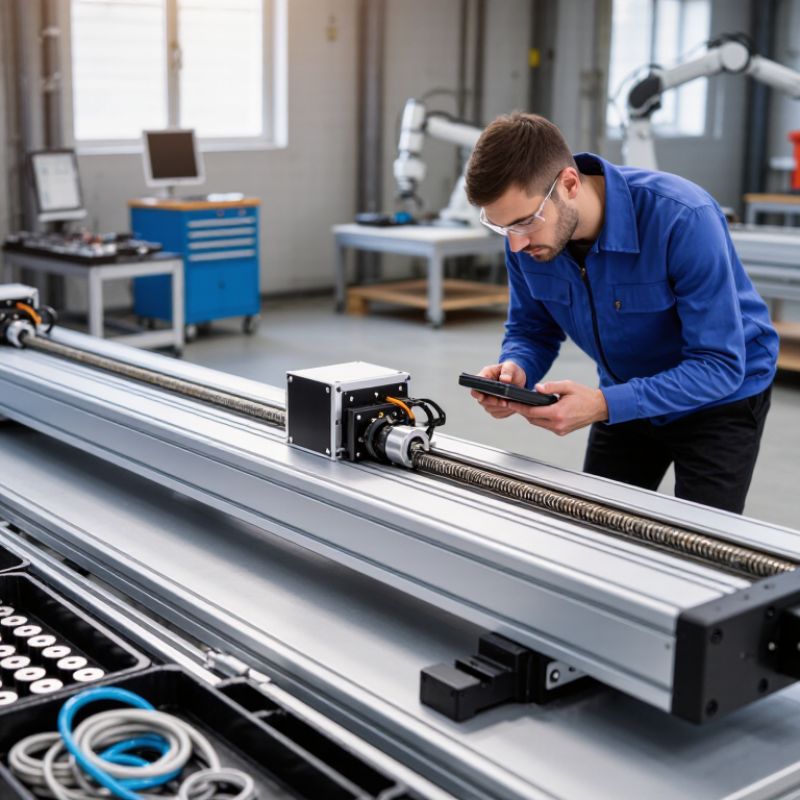
What are ETEL linear motors? They are direct-drive motion systems that convert electrical energy into precise linear movement. Unlike ball-screw mechanisms, they have fewer mechanical contact points and less backlash. This design supports fast acceleration, smooth travel, and accurate positioning. Encoder feedback helps the controller correct movement in real time. In practical applications, engineers use them in semiconductor equipment, precision stages, inspection machines, and advanced automation lines.
Global buyers often choose qualified Chinese suppliers because they can provide flexible configurations, competitive production capacity, and technical support for OEM projects. However, price should not lead the decision. Engineers should check continuous force, peak force, stroke length, thermal behavior, encoder resolution, and duty cycle. A motor may look powerful on paper but perform poorly under constant heat. That detail is easy to miss. Supplier reliability also depends on test records, tolerance control, documentation, and response speed after delivery.
Tips: Ask for measured data, not only catalog values. Request sample testing under your real load and speed. Review cable routing and cooling early. A perfect specification may still fail in a dusty workshop. Leave room for adjustment, because real machines rarely behave exactly like simulations.
A capable Chinese linear motor supplier should prove performance, not only display attractive specifications. Ask for force curves, encoder resolution, repeatability, thermal drift, and force ripple data. Request test records from a completed production unit. A useful factory visit includes winding inspection, magnet assembly, burn-in testing, and final measurement beside the assembly line. Details matter.
The International Federation of Robotics reported 276,288 industrial robots installed in China during 2023, representing 51% of global installations. This scale supports a mature motion-control supply chain, but it does not make every supplier equally reliable. Check whether the supplier controls machining, coil production, testing, and firmware internally. Review ISO 9001 certification, calibration records, traceability codes, and corrective-action reports. A certificate alone proves little.
For global buyers, sample testing should match the real application. Run the motor with the intended guideway, payload, acceleration, and duty cycle. Measure temperature near the coil after extended operation. Ask for factory acceptance testing and documented packaging procedures. Response quality is also evidence: engineers should explain limits clearly, including noise, cooling, and speed trade-offs. I would keep a second qualified source, even after a successful audit. No checklist is perfect. Poor communication may appear only after installation.
Reliable linear motor solutions are defined by measurable standards, not attractive brochures. In commissioning work, engineers should request test data for positioning accuracy, repeatability, thrust stability, and thermal drift. ISO 230-2 can guide positioning tests for machine tools. It helps buyers compare results under stated loads, speeds, and temperatures.
Safety and electromagnetic performance also require clear evidence. IEC 60204-1 addresses electrical equipment used in machinery. IEC 61800-5-1 supports drive-related electrical and thermal safety evaluations. For electromagnetic compatibility, IEC 61800-3 provides a useful reference. Ask whether testing covers the complete motor, drive, cables, and feedback system. Partial testing can hide installation problems. Real machines are rarely perfect.
Quality management matters beyond one successful sample. ISO 9001 certification can indicate controlled production, traceability, and corrective-action processes. However, certification alone cannot prove long-term motor reliability. Suppliers should provide bearing-life assumptions, insulation data, encoder diagnostics, and continuous-duty thermal curves. Look for endurance testing with repeated acceleration, frequent reversals, and realistic payloads. Short demonstrations feel convincing, but they reveal little about five-year operation.
A dependable supplier also explains test conditions plainly. That includes ambient temperature, cooling method, mounting stiffness, cable routing, and measurement uncertainty. The last detail is often overlooked. Buyers should review incoming inspection records and request a documented acceptance test before shipment. A technically strong solution may still fail when integration data is incomplete. That uncomfortable gap deserves attention.
When evaluating Chinese linear motor suppliers, inspect quality beyond brochures. Ask for measured repeatability, positioning accuracy, force data, and thermal limits. A reliable supplier should provide test records from production units, not only laboratory samples. Check machining details closely. Smooth guide surfaces, protected cables, and clean connector assemblies often reveal manufacturing discipline.
Compatibility requires more than matching voltage and stroke. Confirm the motor’s load, acceleration, duty cycle, encoder type, controller interface, and mounting tolerances. Request CAD files and a complete wiring diagram before ordering. Test the motor with your intended drive and motion software. Small differences in feedback resolution can create serious tuning problems. This step is easy to underestimate.
Pricing should include freight, commissioning, spare parts, and engineering changes. Compare the full cost, not the unit price. Ask how suppliers handle failed samples, replacement coils, and warranty claims. Response time matters when a production line stops. A capable technical team should explain causes clearly and provide practical corrective steps. Still, supplier claims need verification. An impressive factory visit may not reflect every shipment. Begin with a documented sample order and define acceptance criteria in writing. Some buyers skip this and regret it later. Keep communication records, test results, and revision numbers throughout the project.
Sourcing linear motors from China requires more than comparing quotations. Buyers should verify the supplier’s manufacturing experience, engineering team, and export records. Request drawings, force curves, repeatability data, encoder details, and cooling requirements. A sample order can reveal assembly quality before a larger commitment.
Do not accept technical promises without evidence. Ask for inspection reports, calibration records, and performance data from a real production unit. Factory videos help, but an independent audit offers stronger confidence. Confirm the motor’s stroke, acceleration, load capacity, and operating environment. Small specification gaps can create expensive redesigns.
Import planning also deserves careful attention. Confirm the correct HS classification with a qualified customs broker. Check duties, local certification, insurance, and delivery terms before payment. Use clear purchase contracts covering tolerances, packaging, spare parts, and warranty handling. Moisture-resistant packaging matters during long sea transport. Keep every document organized, including the commercial invoice, packing list, bill of lading, and test report.
One practical lesson is simple: the cheapest offer may not be the lowest cost. A delayed encoder or poorly protected guide can stop an entire line. Communication may still be imperfect, even with experienced suppliers. Therefore, use marked drawings, written approvals, and staged inspections. A second technical review is worthwhile when the application involves high speed, tight positioning, or continuous production.